
Health — Japan · Synthesis
One of the longest life expectancies in the world and universal coverage, but the oldest society on the planet, placing unprecedented pressure on the financing of healthcare and long-term care.
Citoyen synthesis for the Health category in Japan. Grounded in sector data (MHLW, Statistics Bureau, OECD, WHO). All values are the latest available realised observation — never a forecast. Assessments are distinguished from sourced facts. Data last updated: June 2026.
1. Current state — where the healthcare system stands
One of the longest life expectancies in the world. Life expectancy at birth exceeds 84 years (MHLW), one of the highest on the planet, with a record female life expectancy. Diet, lifestyle, and a universal healthcare system all contribute.
Universal coverage. Japan has universal health insurance, with moderate out-of-pocket costs and broad access to care. Health spending represents around 11% of GDP (OECD), driven upward by ageing.
The world's oldest society. Japan has the oldest population on the planet: nearly one third of its inhabitants are aged 65 or over. This demographic structure places unprecedented pressure on healthcare and long-term care spending.
Many hospital beds, high healthcare consumption. Japan has one of the highest numbers of hospital beds per capita in the world and high healthcare consumption (consultations, examinations). The efficiency and organisation of the system (many private hospitals) are subjects of debate.
Long-term care. Japan was a pioneer in dedicated long-term care insurance ('kaigo hoken', 2000) to cope with ageing — a system studied internationally, but under growing financial pressure.
“Japan has one of the longest life expectancies in the world — and the oldest population on the planet.”
2. Outlook — where the system is heading
Financing ageing. The main challenge is to sustainably finance the healthcare and long-term care of an ultra-ageing society, against a backdrop of record debt (see Economy category) and a declining working-age population.
Care workforce. The shortage of care workers (see Labour category) is acute; Japan is betting on assistive robotics, digitalisation, and targeted immigration in care (see Immigration category).
System efficiency. Rationalising a system with high healthcare consumption and many hospital beds, while maintaining quality, is an efficiency challenge.
Prevention and healthy ageing. Maintaining good health in old age (prevention, autonomy) is central to containing costs and preserving quality of life.
Open questions. Three challenges will shape the period: (1) financing the healthcare of an ultra-aged society; (2) finding the care workforce; (3) improving the efficiency of a high-consumption system.
“The challenge is no longer to live long, but to finance the healthcare and long-term care of an ultra-ageing society.”
3. International comparison — Japan among its peers
Placed in context, Japan achieves exceptional health outcomes, but faces the most advanced ageing in the world — a foretaste of the challenges facing other wealthy countries.
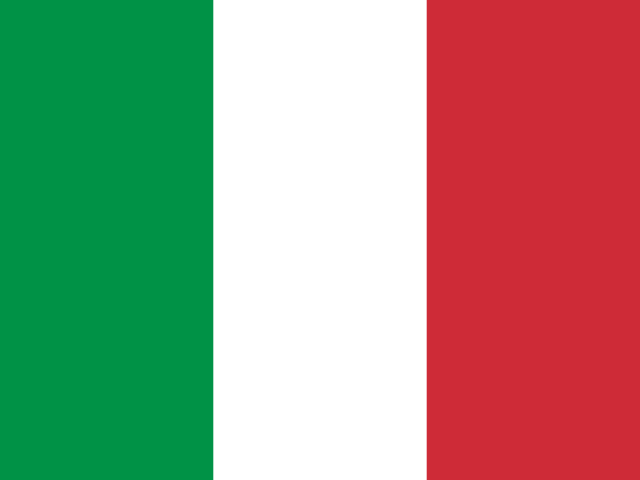
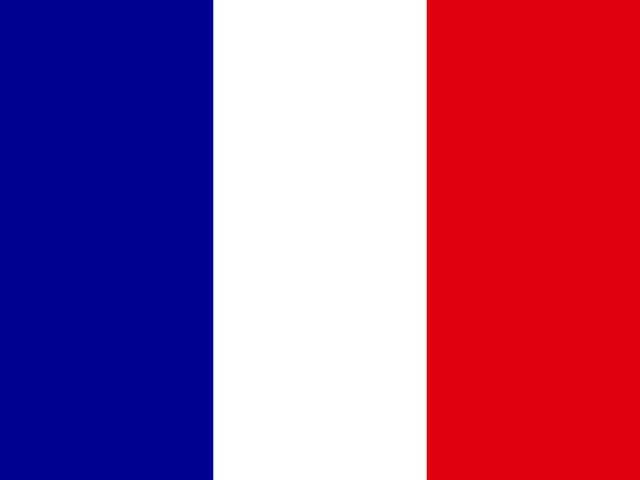
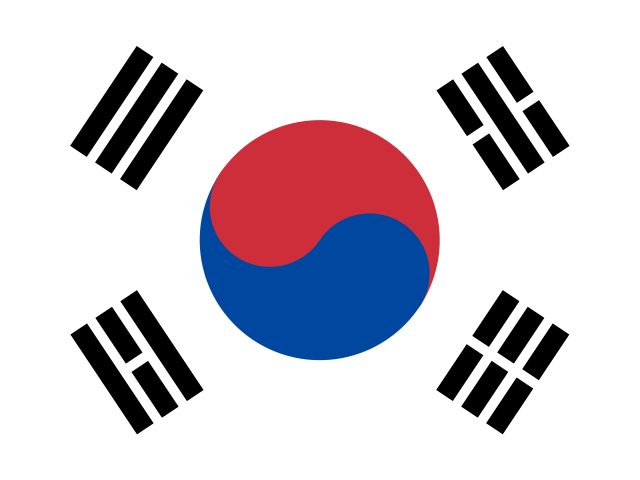
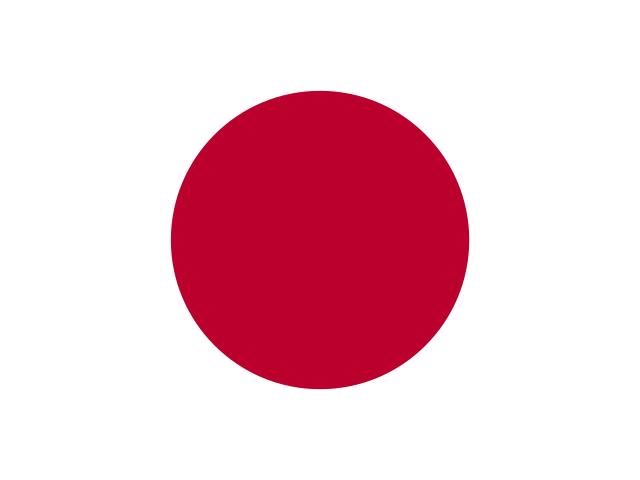
Three lessons. (1) Life expectancy: the highest. At > 84 years, Japan outperforms France (≈ 82.8), Italy (≈ 83.0), Germany (≈ 81.2), and South Korea.
(2) Spending: high, driven by age. At ≈ 11% of GDP, Japanese spending is comparable to that of France and Germany, and structurally trending upward due to ageing.
(3) A laboratory for ageing. Japan, the world's oldest society, is a case study for the healthcare and long-term care systems of ageing countries.
International comparison — health
| Country | Life expectancy | Health spending (% GDP) | Share aged 65+ |
|---|---|---|---|
| Italy | ≈ 83.0 years | ≈ 9% | ≈ 24% |
| France | ≈ 82.8 years | ≈ 11.9% | ≈ 22% |
| South Korea | ≈ 83.5 years | ≈ 9.5% | ≈ 19% |
| Germany | ≈ 81.2 years | ≈ 11.8% | ≈ 22% |
| European Union | ≈ 81.5 years | ≈ 10.4% | ≈ 21% |
| Japan | > 84 years | ≈ 11% | ≈ 29–30% |


Sources: OECD (Health at a Glance), MHLW, Statistics Bureau — latest available realised values. '≈' indicates a rounded figure.
Data used (data journalism base)
| Data | Value | Source |
|---|---|---|
| Life expectancy | > 84 years | MHLW / OECD (Citoyen chart) |
| Health spending / GDP | ≈ 11% | OECD (Citoyen chart) |
| Share aged 65+ | ≈ 29–30% | Statistics Bureau |
| Hospital beds | among the highest in the world | OECD (Citoyen chart) |
| Coverage | universal | MHLW |
| Long-term care insurance | kaigo hoken (since 2000) | MHLW |
Sources (national analyses and references)
Ministry of Health, Labour and Welfare (MHLW — life expectancy, spending, long-term care) · Statistics Bureau of Japan (demographics) · OECD (Health at a Glance) · WHO.
Methodological note — this synthesis distinguishes sourced facts from assessments, remains neutral, dates each data point, and does not extrapolate beyond sources. All values are the latest available realised observation (no forecasts). Note generated by AI, human review required. Same safeguards as the rest of the observatory.