
Security — Russia · Synthesis
A high homicide rate for a major power, linked to alcohol and interpersonal violence, and new security risks arising from the war (returning combatants, weapons circulation).
Citoyen synthesis for the Security category in Russia. Grounded in available data (Ministry of Interior, Rosstat, UNODC). ⚠️ Warning: war and opacity degrade data reliability. All values are the latest realized observation available — never a forecast. Data last updated: June 2026.
1. State of play — where security stands in Russia
A high homicide rate. Russia's homicide rate (of the order of 7-8 per 100,000, UNODC) is high for a major power, above Western Europe and the United States, linked notably to alcohol and interpersonal violence.
A long-term downward trend. Violence has declined since the peaks of the 1990s-2000s, but remains at a high level.
War-related risks. ⚠️ The war creates new risks: returning combatants (including former prisoners enlisted), weapons circulation, trauma — documented factors in the rise of violent crime.
A powerful security apparatus. The State has an extensive security and intelligence apparatus, part of whose activity targets political repression (see Justice and Trust in institutions categories).
⚠️ Opaque data. Crime statistics, like all Russian data, are to be interpreted with caution in the context of war.
“Russia's homicide rate remains high for a major power, linked to alcohol and violence.”
2. Outlook — where security is heading
Post-war risks. Managing the return of combatants and the circulation of weapons is a major security challenge.
Alcohol-related violence. Reducing alcohol-related violence remains a health and security challenge.
Repression vs. crime. The orientation of the security apparatus towards political repression raises rule-of-law concerns (see Justice category).
The open questions. Three challenges will shape the period: (1) post-war risks; (2) alcohol-related violence; (3) the use of the security apparatus.
“⚠️ The war creates new risks: returning combatants, weapons circulation, in an opaque data context.”
3. International comparison — Russia among its peers
Placed in its environment, Russia has high violence for a major power, with new war-related risks. ⚠️ Data to be interpreted with caution.
Three takeaways. (1) Homicide: high. At ≈ 7-8 per 100,000, above the United States (≈ 6) and well above Europe.
(2) An alcohol factor. Alcohol is a major determinant, specific to the Russian case.
(3) War risks. The return of combatants sets the current period apart.
International comparison — security
| Country | Homicides / 100k | Specificity | Trend |
|---|---|---|---|
| Germany | ≈ 1.0 | low violence | stable |
| European Union | ≈ 1 | low violence | stable |
| United States | ≈ 6 | firearms | declining |
| Brazil | ≈ 20 | high violence | declining |
| Russia | ≈ 7-8 ⚠️ | alcohol, war risks | high |
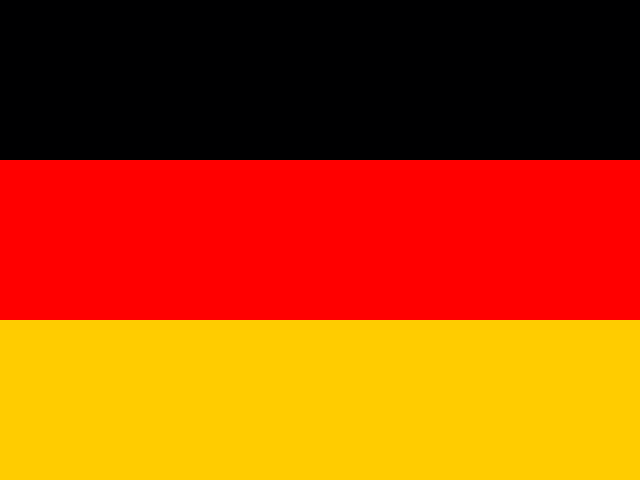
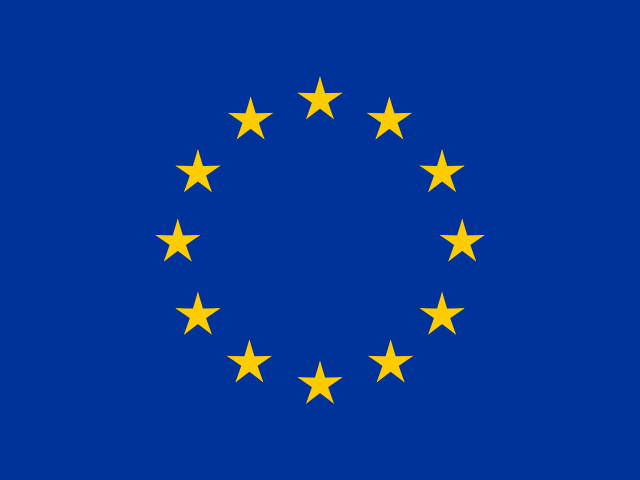

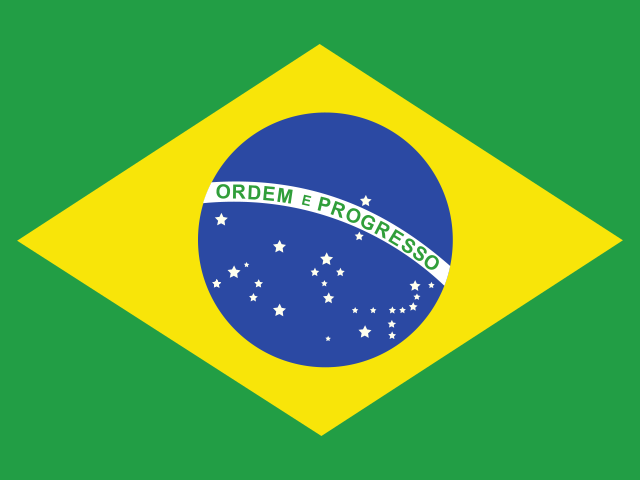
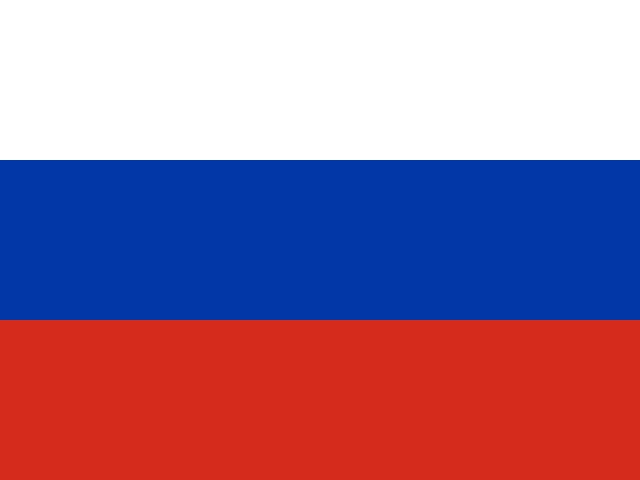
⚠️ Sources: UNODC, WHO. Russian data to be interpreted with caution (war, opacity). "≈" denotes a rounding.
Data mobilized (data-journalism base)
| Data | Value | Source |
|---|---|---|
| Homicide rate | ≈ 7-8 / 100,000 ⚠️ | UNODC (Citoyen chart) |
| Long-term trend | declining (since 1990s) | UNODC |
| Key factor | alcohol, violence | WHO |
| War risks | returning combatants, weapons | analyses |
| Security apparatus | powerful (repression) | analyses |
Sources (national analyses and references)
Ministry of Interior ⚠️ · Rosstat · UNODC · WHO · independent analyses.
Methodological note — the synthesis keeps sourced facts distinct from assessments, stays neutral, dates each figure, and does not extrapolate beyond the sources. ⚠️ Russian data to be interpreted with caution (war, opacity). Latest realized observation available (no forecast). Note generated by AI, human review required.