
Health — South Africa · Synthesis
A life expectancy that has recovered after the devastation of HIV/AIDS, thanks to the world's largest antiretroviral programme, but a deeply unequal health system between public and private.
Citoyen synthesis for the Health category in South Africa. Anchored on sector data (Stats SA, Department of Health, WHO, UNAIDS). All values are the latest available realised observation — never a forecast. Assessments are distinguished from sourced facts. Data last updated: June 2026.
1. Current state — where is the health system today
A life expectancy that has recovered after HIV. Life expectancy at birth, which had fallen dramatically under the impact of the HIV/AIDS epidemic (through the 2000s), has recovered to around 62–65 years (Stats SA), thanks to the massive rollout of treatments — but it remains low for a middle-income country.
The world's largest antiretroviral programme. South Africa has the world's largest HIV epidemic in absolute numbers, and has deployed the world's largest antiretroviral (ARV) treatment programme — a major public health success after years of initial denial.
A two-tier system. The system is deeply unequal: an under-resourced public sector for the majority (Black, poor) and a quality private sector for a minority — a legacy of apartheid and a central issue (see Social Cohesion category).
A dual epidemiological burden. South Africa faces a dual burden: infectious diseases (HIV, tuberculosis) and chronic diseases (cardiovascular, diabetes), as well as high mortality from violence (see Security category).
A national health insurance project. The National Health Insurance (NHI) project aims to unify the system and extend coverage to all — an ambitious and hotly debated reform (funding, feasibility).
“South Africa has the world's largest HIV treatment programme, which has driven a recovery in life expectancy.”
2. Outlook — where is the system headed
Reducing public-private inequalities. Narrowing the gap between public and private health is the central challenge, at the heart of the National Health Insurance (NHI) project.
Continuing the fight against HIV. Maintaining and improving the ARV programme and prevention remains essential for life expectancy.
Dual disease burden. Managing the dual burden (infectious + chronic) and mortality from violence is a public health challenge.
Funding the reform. The feasibility and funding of the NHI, in a context of constrained public finances (see Economy category), are the major challenges of the coming years.
Open questions. Three issues will shape the period: (1) reducing inequalities between public and private (NHI); (2) continuing the fight against HIV; (3) funding the reform.
“A two-tier system — an under-resourced public sector for the majority, a quality private sector for a minority — is at the heart of the national health insurance project.”
3. International comparison — South Africa among its peers
Placed in context, South Africa has a low life expectancy (HIV legacy) but one that is recovering, and a highly unequal system.
Three lessons. (1) Life expectancy: low. At ≈ 62–65 years, it is below India (≈ 70–72), Brazil (≈ 75–76) and well below France (≈ 82.8) — the HIV legacy.
(2) The world's largest HIV programme. A distinctive public health success that has driven a recovery in life expectancy.
(3) A two-tier system. The public-private divide, a legacy of apartheid, is more marked than elsewhere.
International comparison — health
| Country | Life expectancy | System | Specificity |
|---|---|---|---|
| France | ≈ 82.8 years | universal | — |
| European Union | ≈ 81.5 years | universal | — |
| Brazil | ≈ 75–76 years | universal (SUS) | under-funded |
| India | ≈ 70–72 years | partial | high out-of-pocket costs |
| South Africa | ≈ 62–65 years | two-tier | HIV (largest ARV programme) |
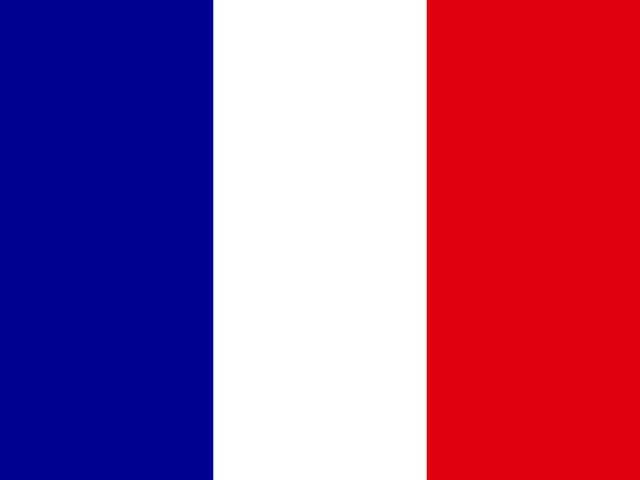
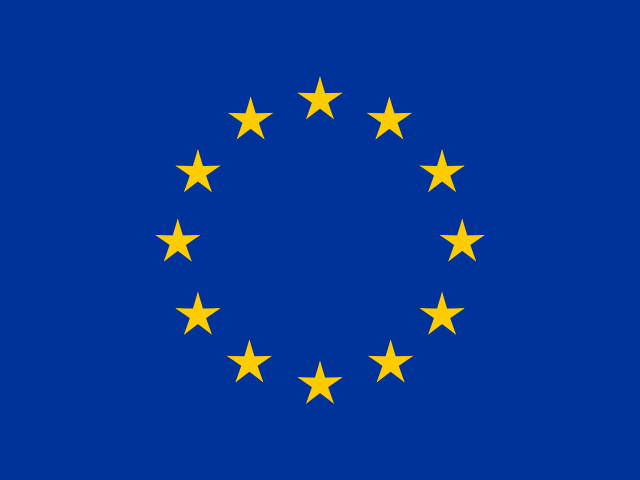
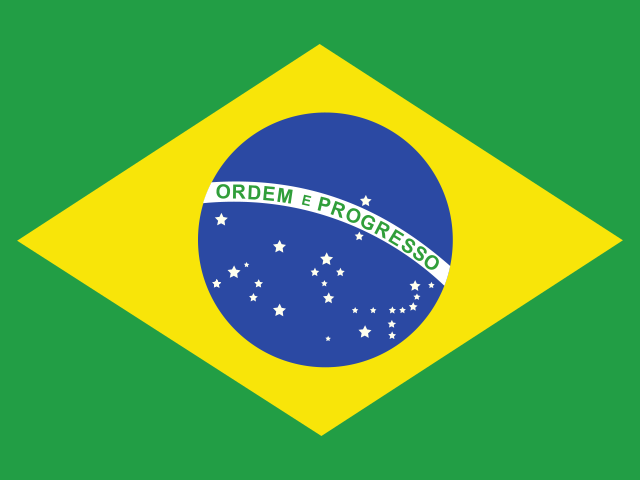
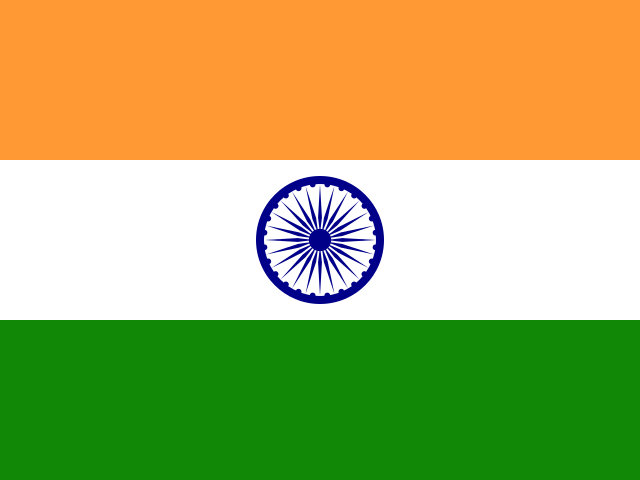
Sources: WHO, UNAIDS, Stats SA — latest available realised values. Life expectancy reflects the HIV legacy, in recovery. "≈" indicates rounding.
Data used (data journalism baseline)
| Data | Value | Source |
|---|---|---|
| Life expectancy | ≈ 62–65 years (recovering) | Stats SA / WHO (Citoyen chart) |
| HIV/AIDS | largest epidemic + largest ARV programme | UNAIDS |
| System | two-tier (public/private) | Department of Health |
| Dual burden | infectious + chronic + violence | WHO |
| Reform | national health insurance (NHI) | Department of Health |
Sources (national analyses and references)
Stats SA (life expectancy, mortality) · Department of Health (NHI) · UNAIDS (HIV) · WHO · World Bank.
Methodology note — the synthesis distinguishes sourced facts from assessments, remains neutral, dates each data point, and does not extrapolate beyond the sources. All values are the latest available realised observation (no forecast). Note generated by AI, human review required. Same safeguards as the rest of the observatory.